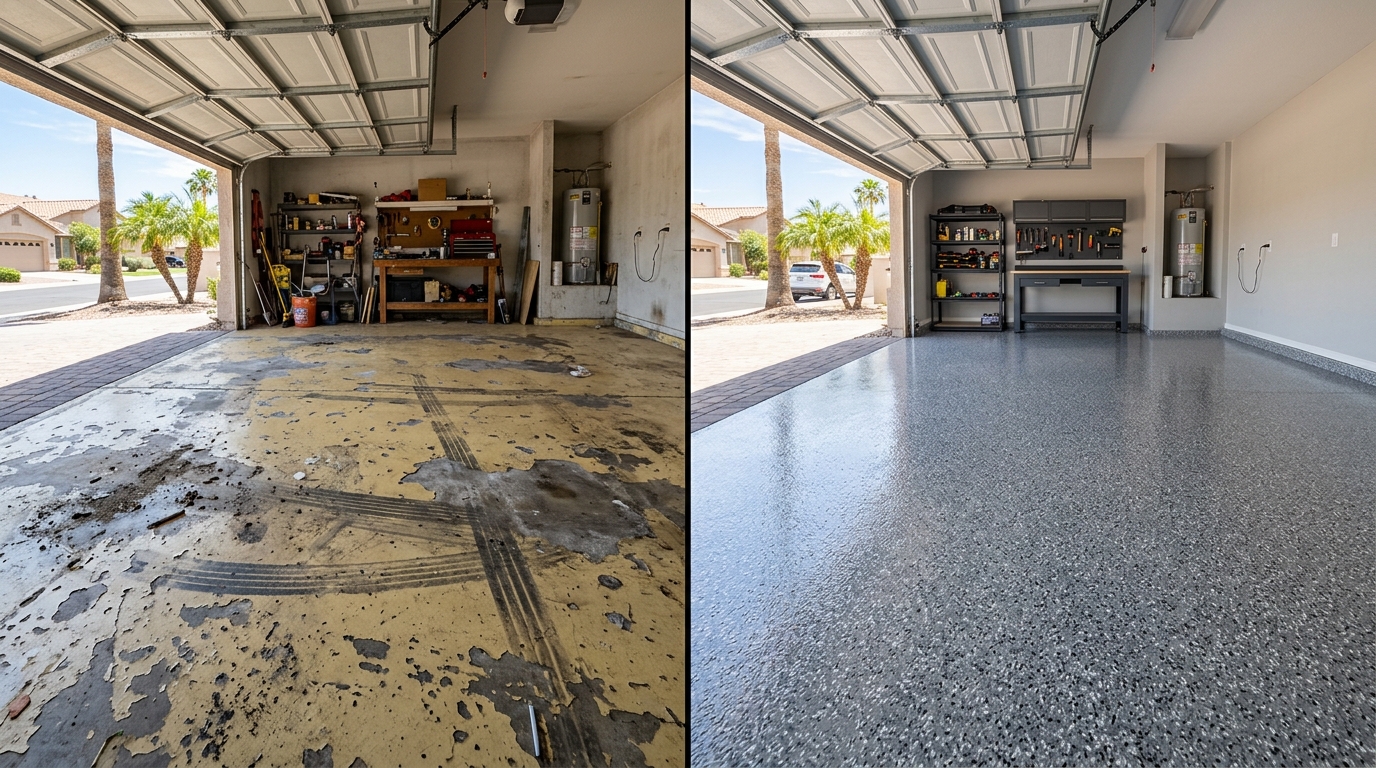
If you've started researching garage floor coatings in Phoenix, you've probably noticed two words come up again and again: epoxy and polyaspartic. They can look similar in photos. They are not similar on your floor — especially not in a garage that hits 130°F+ every summer.
At Vantyx, roughly a third of the floors we install are replacements for failed epoxy. So let's give you the honest comparison we wish every homeowner saw before spending money.
What Is Epoxy?
Epoxy is a two-part resin (epoxide resin + polyamine hardener) that has been used on garage and industrial floors since the 1950s. It's affordable, widely available at big-box stores, and builds a thick film. That's where the good news ends for Arizona.
Epoxy's weaknesses are well documented — even mainstream home publications like This Old House note its long cure times and sensitivity to surface prep:
- UV instability. Epoxy ambers and chalks under ultraviolet light. In Phoenix, sunlight bouncing off your driveway into the garage is enough to yellow it within a couple of years.
- Slow cure. Most epoxies need 3–7 days before you can park on them. That's a week of your cars baking in the driveway.
- Hot-tire pickup. This is the big one in Arizona. Tires coming off 110°F asphalt transfer enormous heat into the coating. Cheap epoxy softens, bonds to the tire, and peels up in tire-shaped patches.
- Brittleness. Epoxy cures hard but brittle, so it chips when you drop tools and cracks when the slab moves.
What Is Polyaspartic?
Polyaspartic is a modern aliphatic polyurea — originally developed in the 1990s to coat steel bridges against corrosion and abrasion. It came to residential concrete because it solved every one of epoxy's weaknesses:
- 100% UV stable. Polyaspartic will not yellow, amber, or chalk. Ever. That's chemistry, not marketing.
- One-day install, 24-hour drive-on. Polyaspartic cures fast. We install your entire TRI-BOND™ system in a single day and you park on it the next.
- Heat tolerance. Polyaspartic stays stable far beyond any temperature an Arizona garage can produce, which is why hot-tire pickup is essentially a non-issue.
- Flexibility. It cures hard and flexible, so it absorbs impacts and moves with minor slab expansion instead of cracking.
Head-to-Head: The Numbers That Matter
| Factor | Epoxy | Polyaspartic (TRI-BOND™) |
|---|---|---|
| UV stability | Yellows in 1–3 years | Never yellows |
| Cure time | 3–7 days | Drive on in 24 hours |
| Hot-tire pickup | Common failure | Resistant |
| Abrasion resistance | Moderate | ~4x more abrasion resistant |
| Flexibility | Brittle | Flexible, impact absorbing |
| Install time | 2–3 days | 1 day |
| Lifespan in AZ | 2–5 years | Decades — lifetime limited warranty |
"But Epoxy Is Cheaper, Right?"
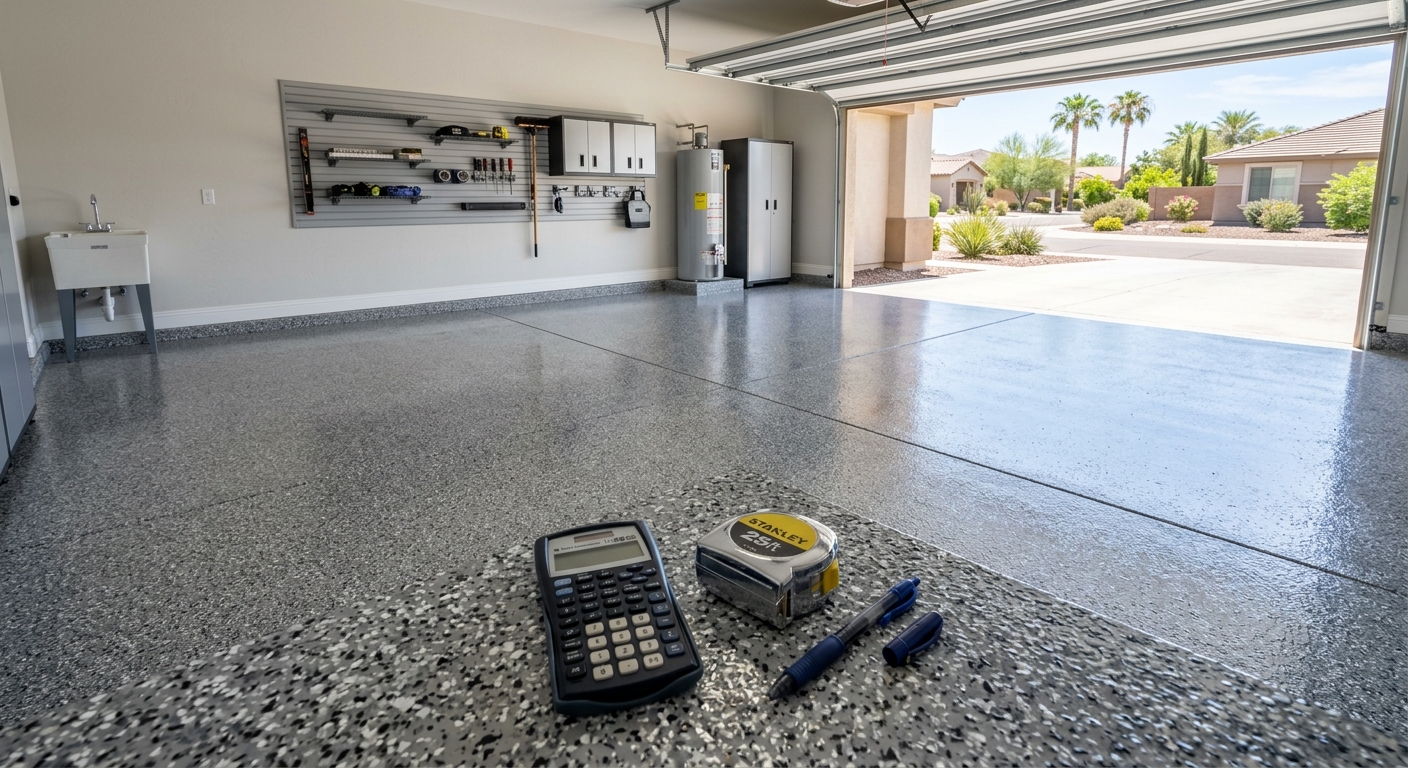
Upfront, yes — a DIY epoxy kit runs a few hundred dollars and budget installers will quote less than a polyaspartic system. But cost per year tells the real story. A $600 DIY kit that fails in two summers costs more per year than a professional polyaspartic floor that lasts decades — and that's before you pay for grinding off the failed epoxy. We break down real numbers in our Phoenix garage floor coating pricing guide.
There's a reason searches for "epoxy garage floor Phoenix" keep rising while actual epoxy installs keep failing: people know the word "epoxy," but what they actually want is a floor that survives Arizona.
Why Prep Matters More Than the Product
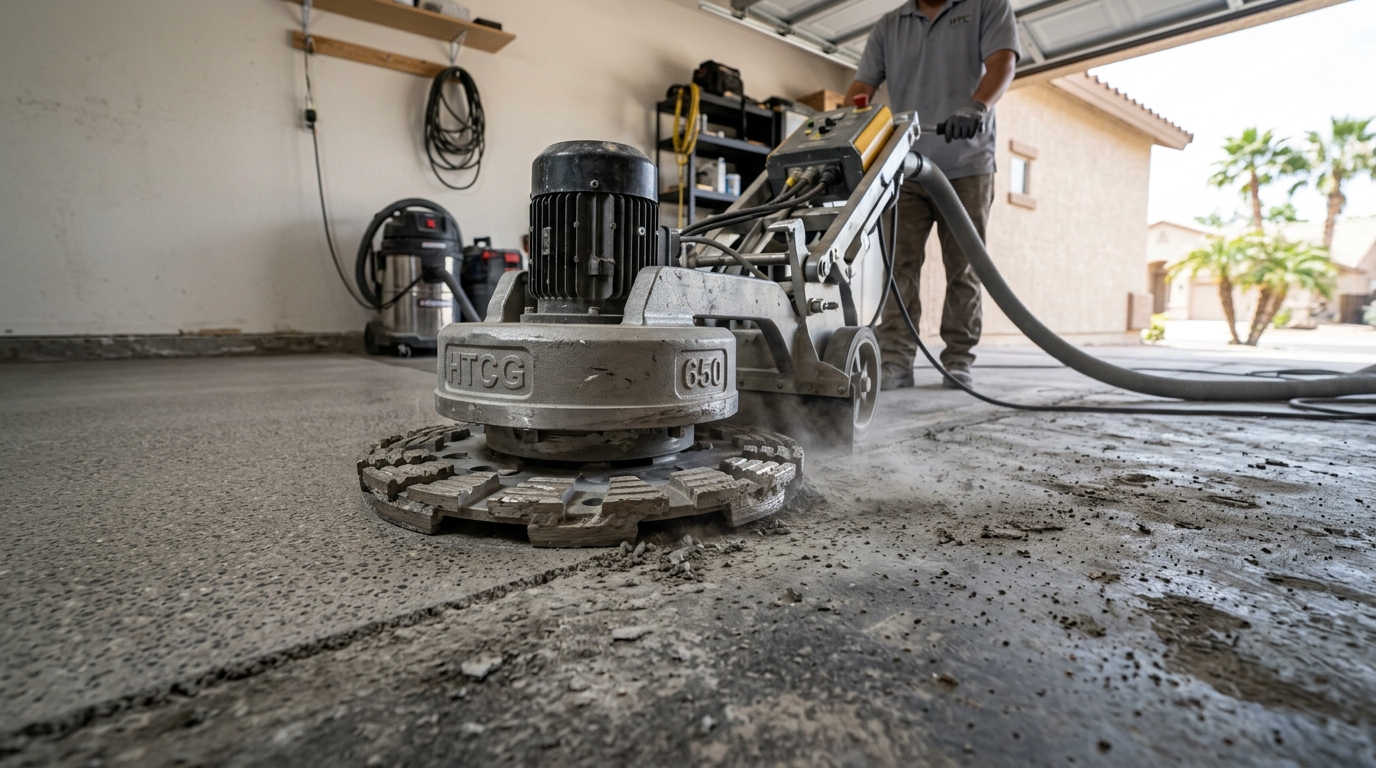
One thing both chemistries share: neither will survive on poorly prepped concrete. Acid etching (what the DIY kits tell you to do) is not mechanical preparation. We diamond-grind every slab to open the pores of the concrete before the first coat goes down — it's phase one of our TRI-BOND™ process, and it's why we can offer a lifetime limited warranty. Read the full breakdown in our guide to garage floor prep.
The Verdict for Phoenix Homeowners
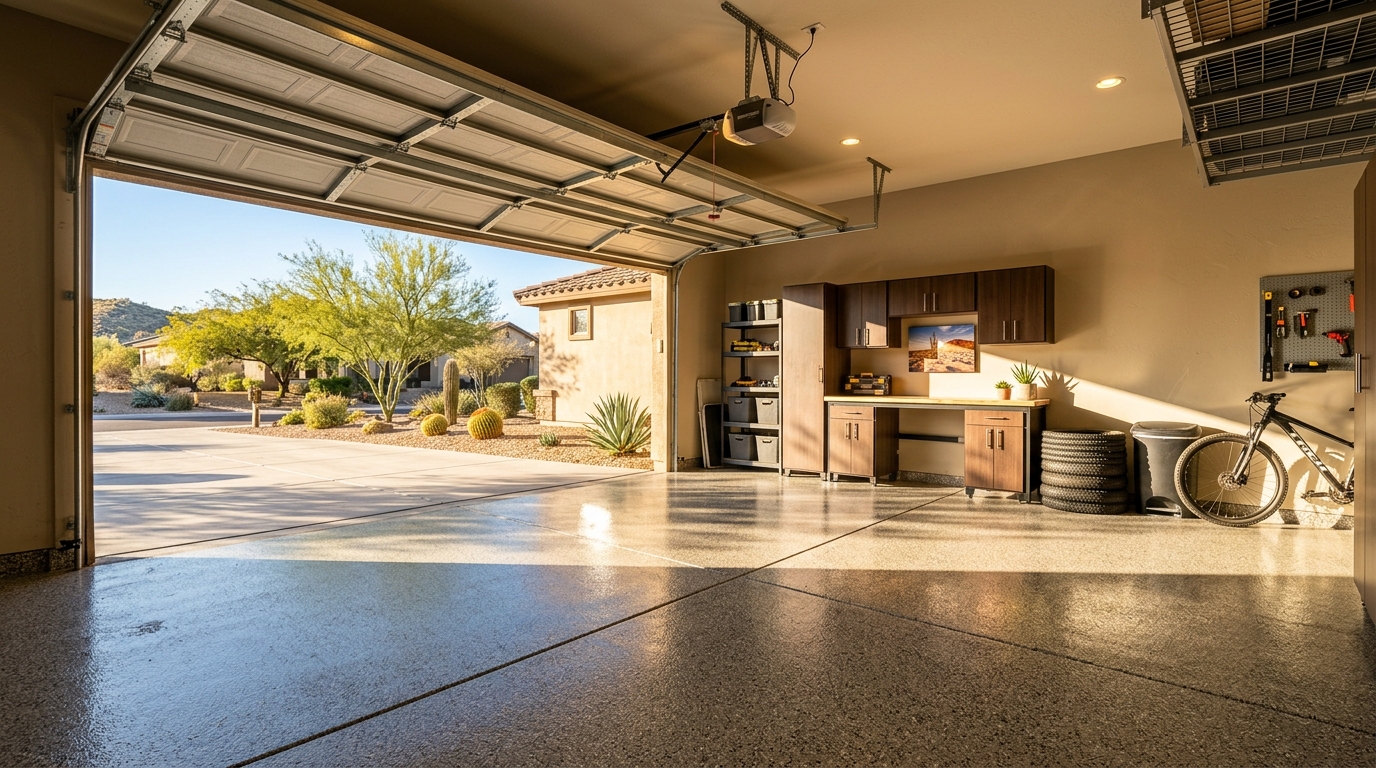
If you live in a mild climate, park outside, and plan to move in three years, epoxy might be acceptable. If you live in Scottsdale, Gilbert, Chandler, Mesa, or anywhere else in the Valley — where summer slab temperatures are brutal and UV exposure is constant — polyaspartic isn't an upgrade, it's the only coating engineered for these conditions.
That's why Vantyx installs polyaspartic exclusively, through our three-phase TRI-BOND™ system: mechanical diamond grinding, a moisture-tolerant polyaspartic base coat with full flake broadcast, and a UV-stable polyaspartic topcoat.
Ready to see the difference on your own slab? Get your free in-home estimate — we serve the entire Phoenix Metro, from Scottsdale to Goodyear.
Frequently Asked Questions
The Vantyx Team
Vantyx Coatings LLC installs the TRI-BOND™ polyaspartic garage floor coating system across the Phoenix Metro Area. Licensed, insured, and obsessed with floors that last a lifetime.