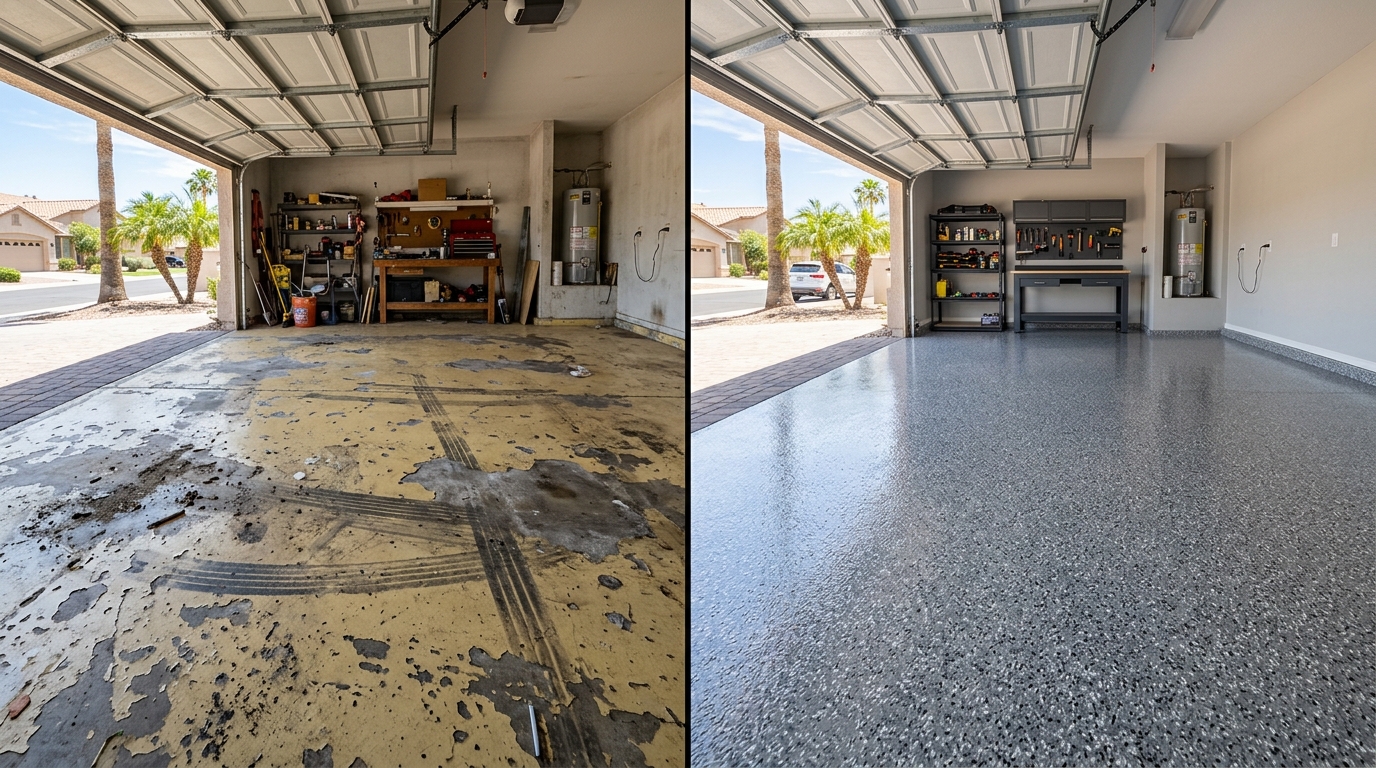
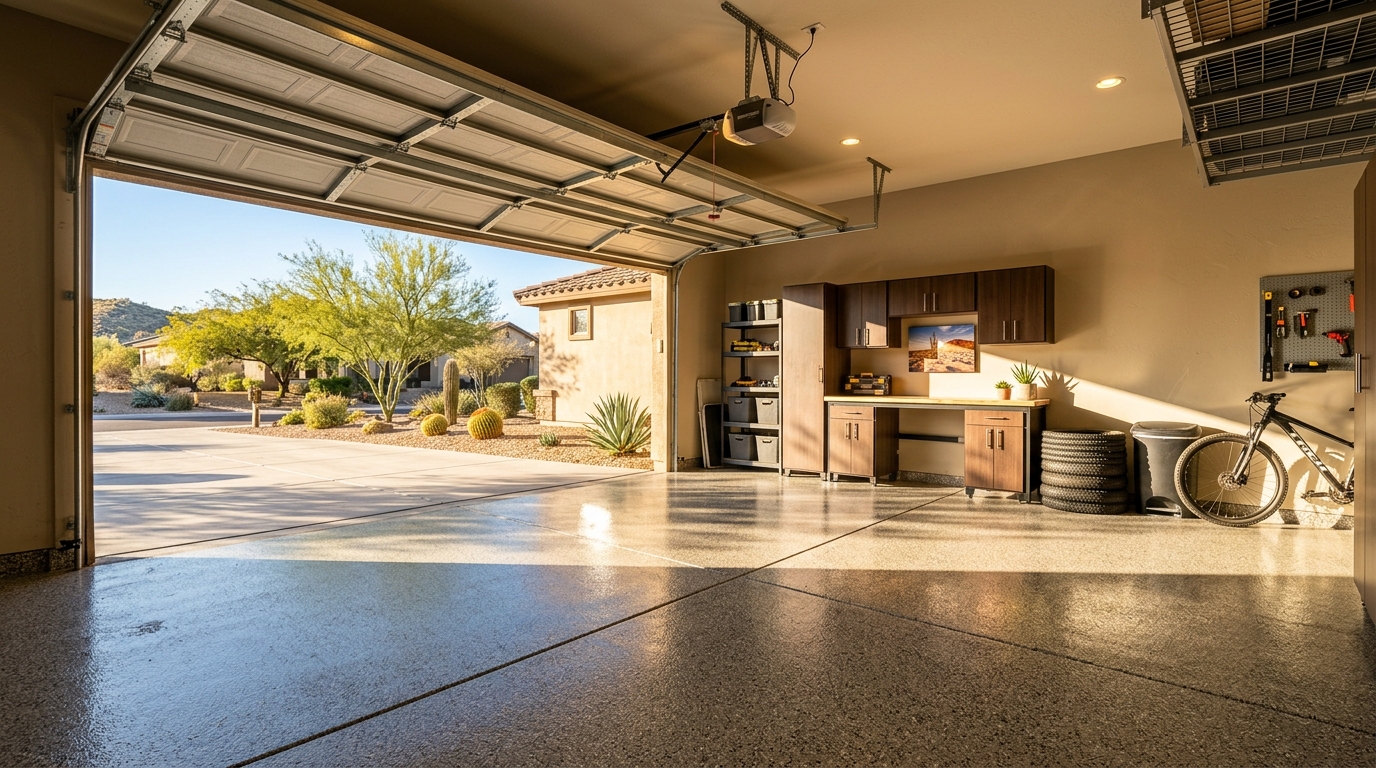
Phoenix averages nearly 300 sunny days a year and some of the highest UV index readings in the United States. Your garage floor — even with the door closed most of the day — absorbs far more ultraviolet radiation than coatings in almost any other market. If your coating isn't UV stable, Arizona will find out fast.
How UV Destroys a Garage Floor Coating
Ultraviolet light carries enough energy to break the chemical bonds in many polymers. In a non-UV-stable coating (standard epoxy is the classic example), this causes a chain reaction:
- Yellowing (ambering). The resin's molecular structure degrades and shifts color. Clear coats turn yellow; grey floors turn greenish; whites turn cream. It's irreversible.
- Chalking. The surface oxidizes into a powdery film that dulls the finish and rubs off on everything.
- Embrittlement. UV-degraded resin loses flexibility, so it micro-cracks under thermal cycling — and Phoenix slabs cycle hard, swinging 40–60°F between a summer afternoon and a winter night.
- Delamination. Micro-cracks let moisture and heat work under the film. Combined with hot-tire pickup, the coating starts releasing in sheets.
"But My Garage Door Is Closed Most of the Day"
Three reasons that doesn't save you in Arizona:
- Reflected UV. Your driveway is a giant UV reflector. Every time the door is open, bounced ultraviolet light floods the first 10–15 feet of your floor. That's why failed epoxy floors in the Valley almost always yellow in a fade pattern from the door inward.
- Window and side-door exposure. Many Valley garages have windows or a side exit that creates a permanent UV hot spot.
- Heat amplifies everything. UV degradation accelerates with temperature. A slab that reaches 110–130°F in a Mesa or Surprise summer degrades a marginal coating several times faster than the same product in Seattle.
What "UV Stable" Actually Means
Marketing language matters here, because the industry uses two different terms:
- UV resistant — the coating degrades more slowly. It still yellows, just on a delay. Most "premium" epoxies and many hybrid systems fall in this category.
- UV stable — the chemistry is aliphatic, meaning its molecular bonds don't absorb UV in a way that breaks them. The coating will not yellow over its lifetime.
Aliphatic polyaspartics — the chemistry in our TRI-BOND™ system — are genuinely UV stable. They were engineered for exposed steel bridges and parking decks in full sun. Your garage is an easy assignment by comparison.
What Happens If You Skip It: A Timeline
Here's the typical lifecycle we see when we're called to replace a non-UV-stable floor in the Valley:
- Months 0–12: Floor looks great. Homeowner is happy.
- Year 1–2: Slight ambering near the garage door. Gloss starts dulling. First hot-tire marks appear.
- Year 2–3: Visible yellow fade pattern from door inward. Chalky residue on items stored near the door. Coating peeling under tires.
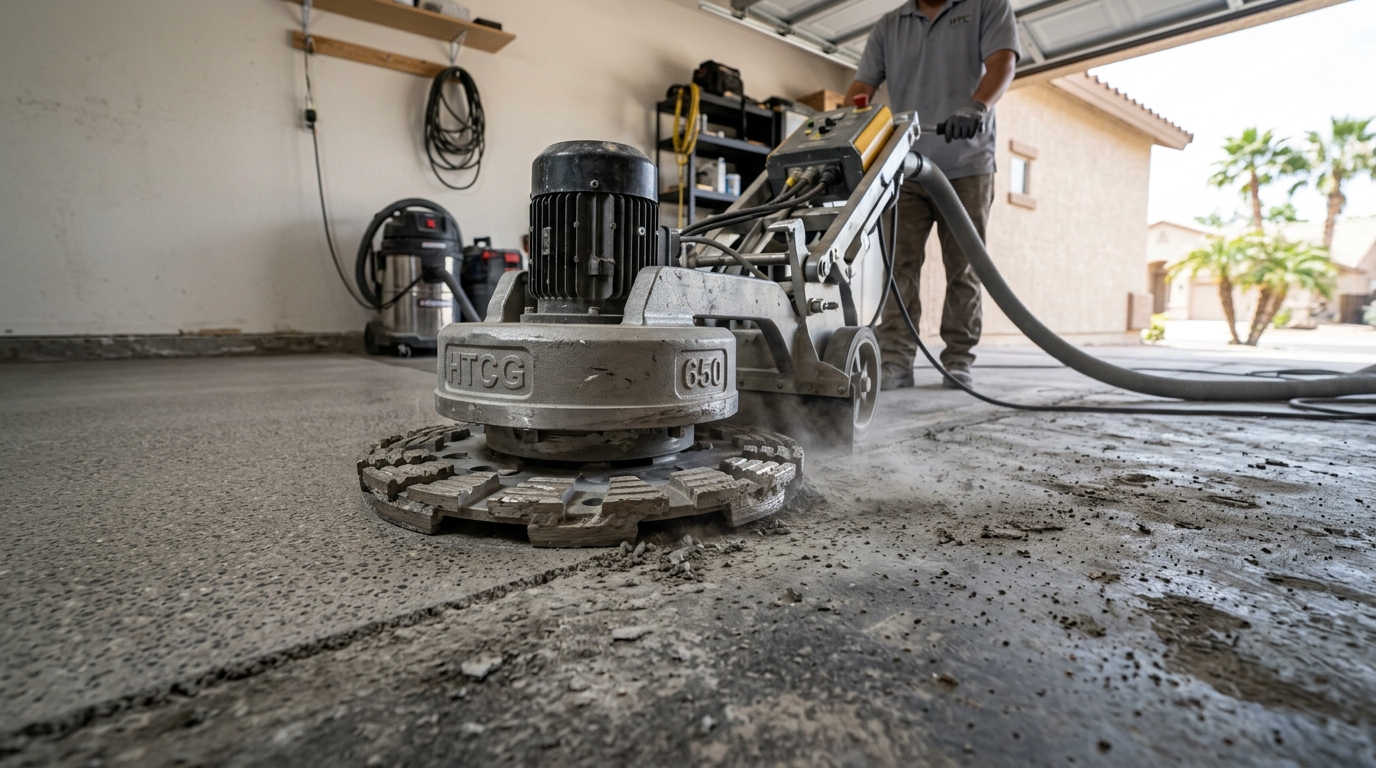
- Year 3–5: Widespread delamination. The floor looks worse than bare concrete, and now it costs $1–$2/sq ft just to grind it off before recoating.
The fix costs more than doing it right the first time — we walk through that math in our Phoenix pricing guide.
How Vantyx Solves It
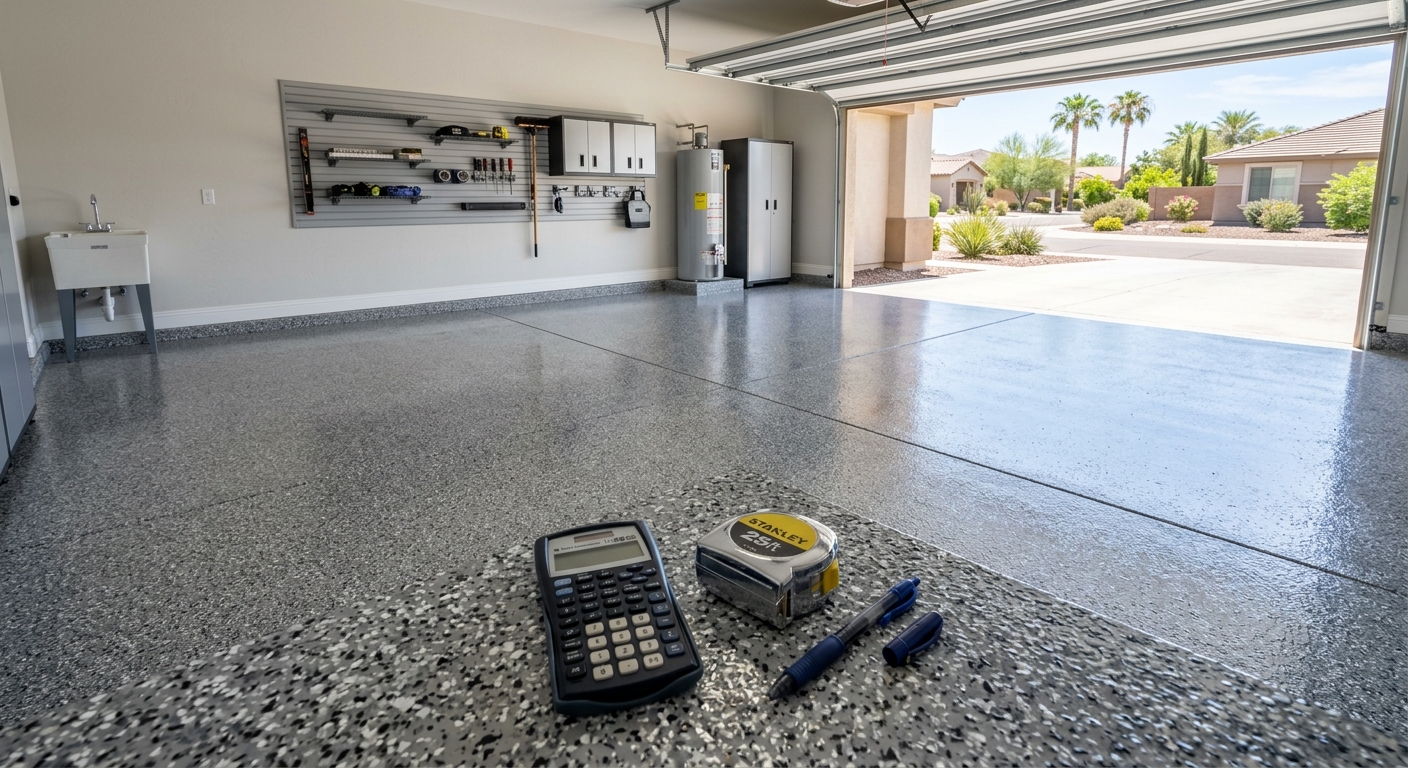
Every TRI-BOND™ floor uses a 100% UV-stable polyaspartic topcoat over a polyaspartic base with full vinyl-flake broadcast. The flake layer itself adds another layer of protection, and the colors are stable pigments that won't shift. The result is a floor that looks the same in year ten as it did on install day — whether you're in sun-drenched Paradise Valley or Ahwatukee.
It's also why we can offer a lifetime limited warranty that includes yellowing — something no epoxy installer in Arizona will put in writing.
Don't let the Arizona sun eat your investment. Get your free in-home estimate and we'll show you flake samples that will look identical a decade from now.
Frequently Asked Questions
The Vantyx Team
Vantyx Coatings LLC installs the TRI-BOND™ polyaspartic garage floor coating system across the Phoenix Metro Area. Licensed, insured, and obsessed with floors that last a lifetime.